

Careless People
Bandaids won't help if the wound is serious

Over here, I am trying to stay hopeful, but recent news about NPR and school funding have hit close to home.
Our kids are hearing the news too, and we need to help them grapple with worries. This article about helping kids cope with what they are hearing about ICE raids offers concrete suggestions about a very tough topic.
As always, I'm trying to balance my news consumption with activities that bring me joy and hope.
We took a few hours this weekend to spend time with friends at the beach, and moved over to a coffee shop when it started to rain. One friend described how she is turning her fears for our neighbors into action by studying Spanish so she can be more helpful. She said she initially felt a bit guilty--because it turns out learning Spanish is fun.
But... we need joy, too. Finding ways to be helpful that are sustainable is the only way we can keep at it. Otherwise, we will get exhausted and burn out.
Summer Reading
Careless People is a memoir by former Facebook Global Public Policy director, Sarah Wynn-Williams. Once I heard that Meta went to court to try to keep Careless People: A Cautionary Tale of Power, Greed, and Lost Idealism from being promoted, I knew I had to read it.
The author started at Facebook in 2011 as a young idealist; she was a true-believer in the potential of social media to help solve societal problems. She had worked for the United Nations and at the New Zealand embassy in Washington and while in DC, she repeatedly pitched herself to Facebook. Eventually they invited her onto the team and she spent the next seven years shaping and witnessing Facebook’s consequential global policy decisions.
Her own moral reckoning feels muted at times in the story. For example, she asked to be taken off the China team rather than leaving the company over Facebook’s apparent disregard for human rights in China. My husband read the book right before me, and we’d compare notes when I would gasp out loud and exclaim “they didn’t!” He’d respond, “Can you believe it?”
The book opens with two compelling stories--one describes in harrowing detail the process of navigating a disastrous state dinner in Latin America with Mark Zuckerberg. The other story, from the author's childhood in New Zealand, details the author's experience surviving a shark attack. She came close to death– not in the initial attack, but because her parents and doctor initially missed the seriousness of her injuries and failed to take appropriate measures to protect her. This shark story haunts the rest of the book, as we see through Wynn-William's eyes how Facebook’s growth-at-any-cost approach causes irreparable harm that they observe, but don’t take seriously.
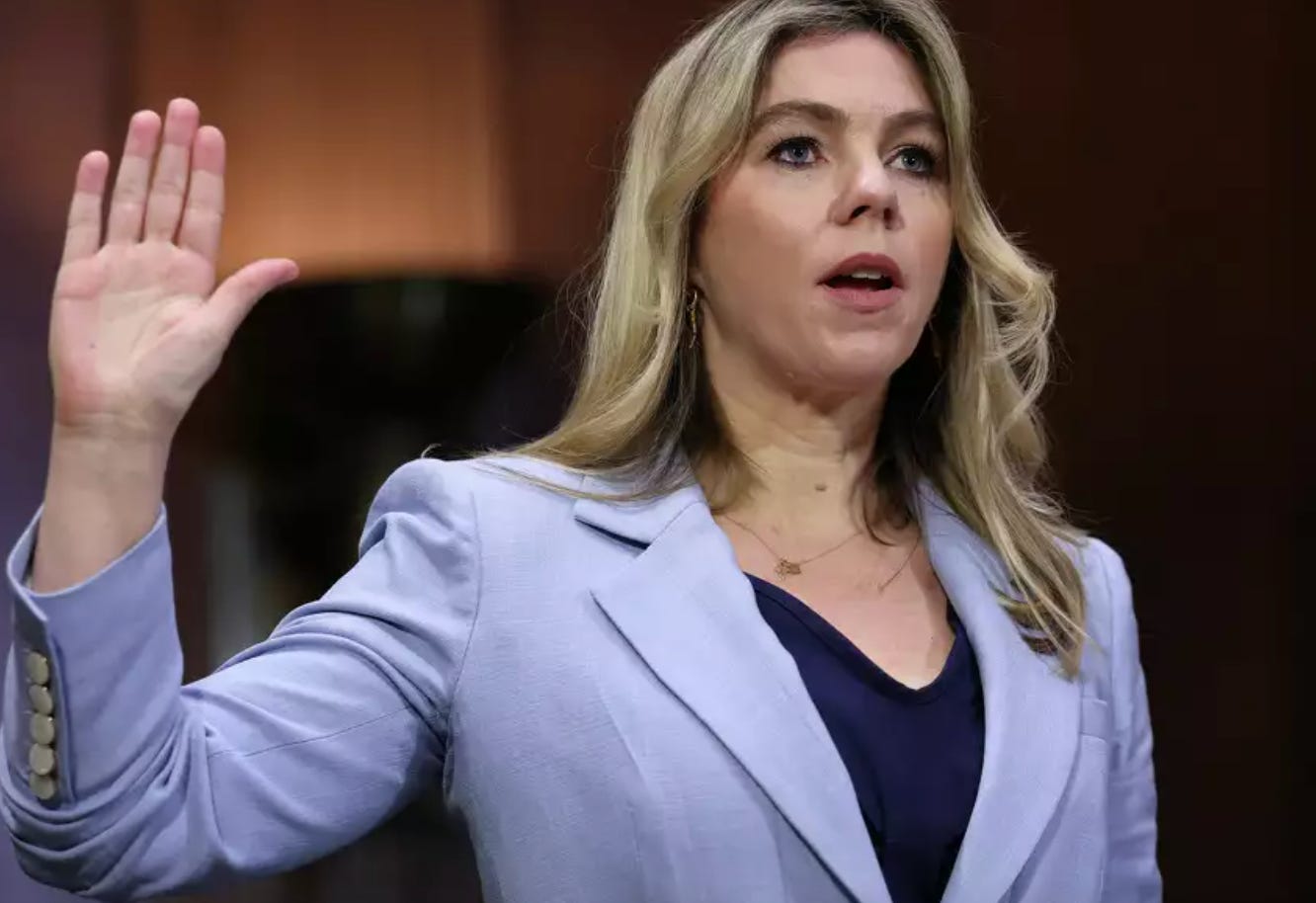
Crucially, Sarah Wynn-Williams exposes how Facebook targeted teen girls in vulnerable moments, like after they have posted and then taken down a selfie. Like sharks looking for blood (see what I did there?), the algorithm would pounce on that vulnerability to serve an anxious, or depressed teen an ad for a product that targets those feelings.
Wynn-Williams was horrified by this:
“We don’t know what happens to young teen girls when they’re targeted with beauty advertisements after deleting a selfie. Nothing good.”
In addition to a careless disregard for app users well-being, the book describes a toxic workplace culture. Readers learn about sexual harassment, disregard for parental leave, people getting yelled at in public by their bosses, and much more. I’ve worked in academia—which can get pretty yucky— but this sounds way worse (at least worse than anything I witnessed.)
I know I'm making this book sound nightmarish but it is SO FASCINATING and well worth reading.
Meta products like Facebook, Instagram and WhatsApp are so woven into our lives--reading the book is a reminder of how recently these apps became so ubiquitous. And a good reminder that there are always choices involved in design. If you have a young programmer or aspiring engineer in your house, the conversation about ethics and user safety are important themes.
Social Media Summer Check In.
Once you read Careless People, you may feel like it is a good time to do a little social media audit with yourself and with any kids in your household who use social apps. How are you feeling about the apps and connections you have? Sometimes we turn to social media for an emotional boost and it doesn't make us feel great.
Remind kids that what they’re seeing on social media is a “highlight reel” and talk to them if you see them filtering or editing their photos. Remember, people often curate their stories and posts to "mountaintop moments" not typical day-to-day moments that life is made of. That's why some kids love to take intentionally "ugly" or "random" photos on apps like Snapchat--to counter the "perfect world" that some feel pressured to share on apps like Instagram.
Bottom line: If scrolling hurts: take a break, put away your phone, and tap into something different. A book, doodling, a board game, a walk, cleaning out a closet to find hidden treasure or to make more space.We want to be intentional with our time.
If you read Careless People, please drop me a line to let me know what you think!
PS: The school year is heating up. I am excited about my upcoming professional development workshops August. I’m heading to Cleveland, Ohio on October 15, Westchester, NY on October 23, and Charlotte, NC on February 4th 2026. Speaking trips to South Florida, Hawaii and Europe are in the works. Let me know if you want to be part of any of these trips, or to plan other in-person or virtual events.
I am just finishing Careless People, it is quite the read!
Where in Europe will you be?